Subsurface Engineering
AspenTech Subsurface Intelligence™ (ASI)
AspenTech Subsurface Intelligence™ (ASI) is a cloud native, AI-powered agentic environment for the energy industry. It transforms capital-intensive subsurface reservoir modeling by analyzing trillions of data points to accurately characterize geology at greater depths. By streamlining complex workflows, ASI accelerates insight generation, enables confident decision-making, and significantly reduces the exploration to production lifecycle by years.
Lead product designer
Joined the team at the outset of a 0→1 initiative to reimagine multiple legacy desktop applications as one modern web platform. Partnered closely with product managers, product owners, developers, and field domain experts to shape the product from the ground up — from early concept through to a working, validated design.
Key contributions
Led end-to-end product design, from discovery through high-fidelity execution
Conducted user research with field experts to ground design decisions in real workflows
Rapid-prototyped using AI-assisted ("vibe coded") tools to test concepts quickly
Defined and established AI interaction patterns for the product
Designed data visualization systems to support complex subsurface engineering data
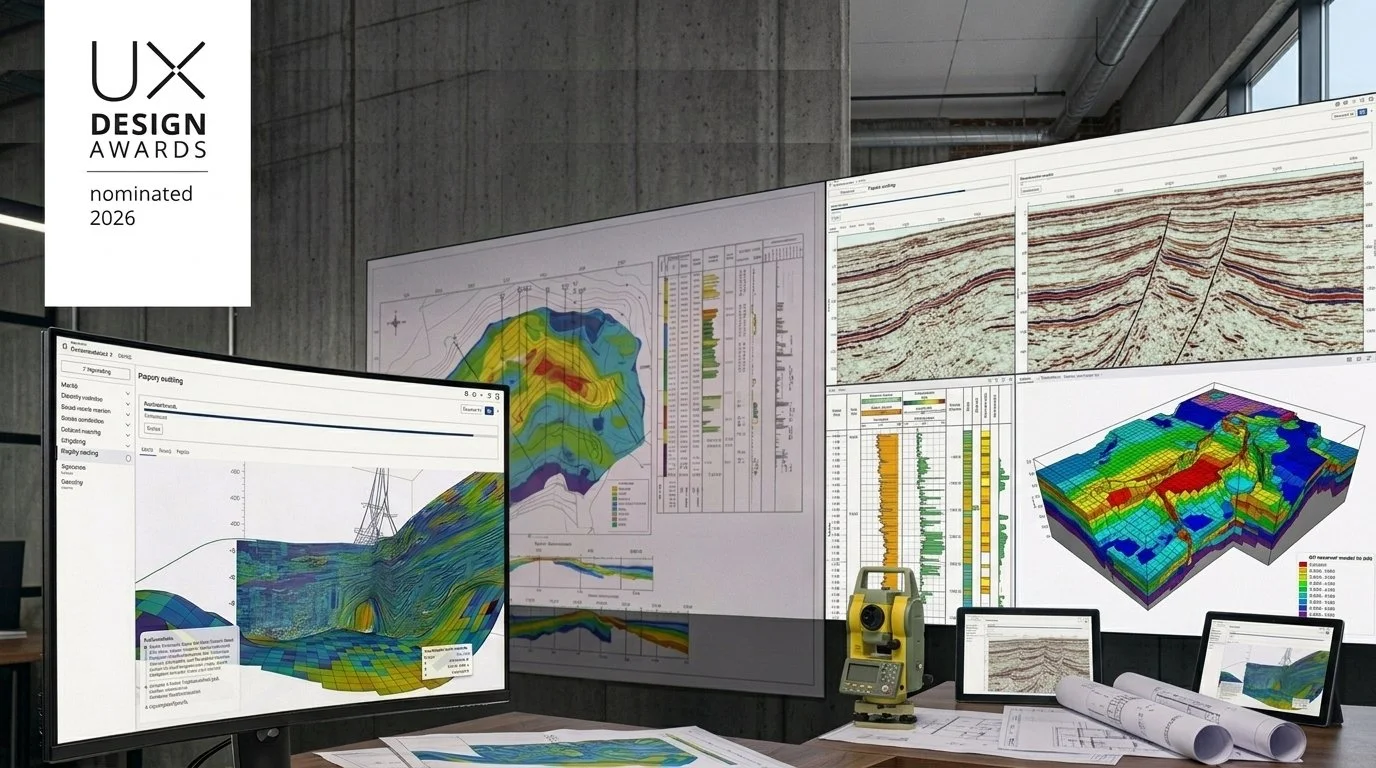
Got nominated for UX Design Awards Autumn 2026 under product category
Industry need
Ecosystem that fosters collaboration and fast paced decision making
Today, in subsurface engineering timeline for research and evaluation of reservoirs takes a long time and high investment. There is a need to accelerate subsurface-related decision making while leveraging existing investments.
User need
Simplicity in complex workflows, lesser manual work and faster decision making
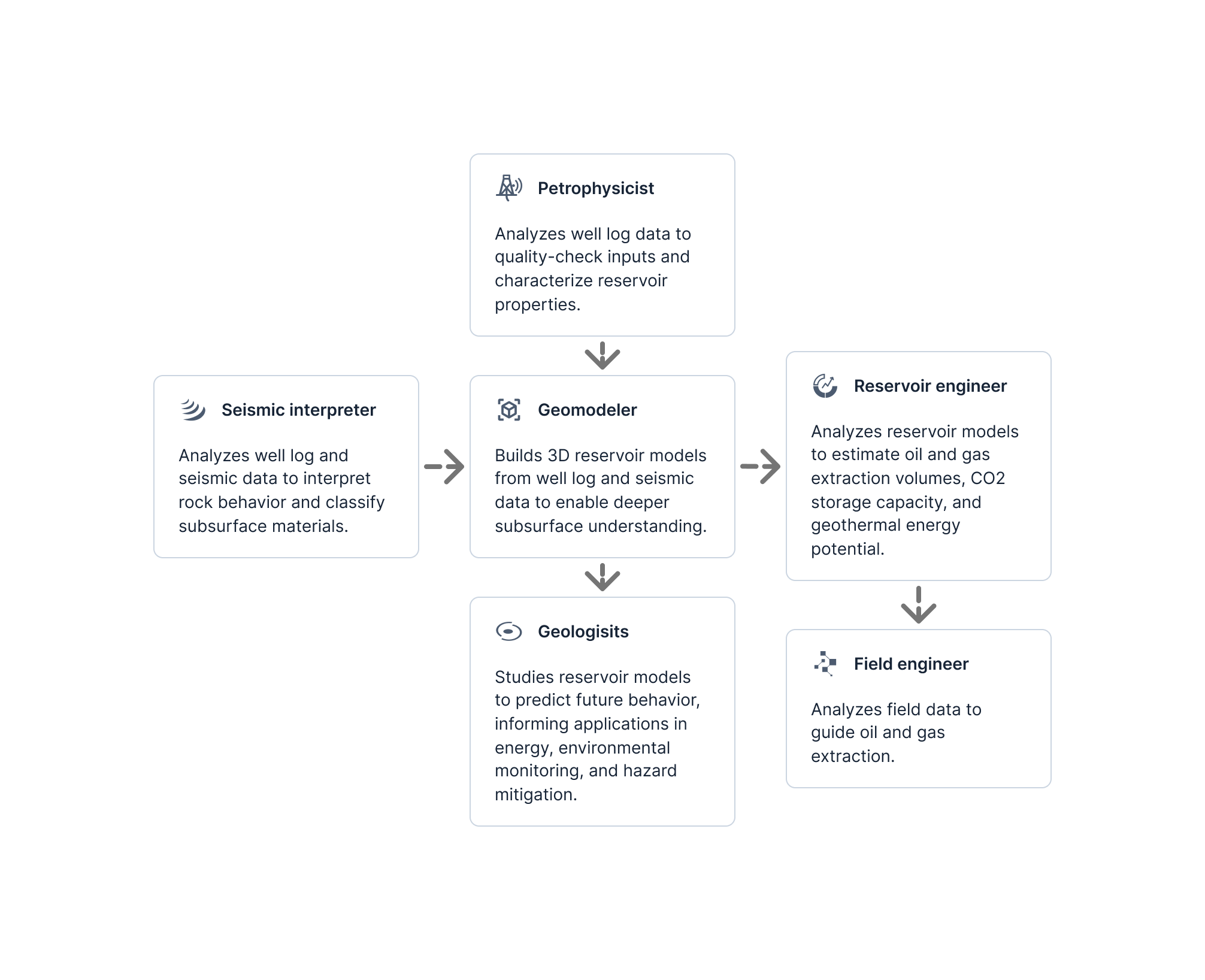
Today's workflows require users to make numerous decisions just to complete a single task, and multiple personas work across interconnected workflows, passing files back and forth to piece together more complex work.
User persona
Process
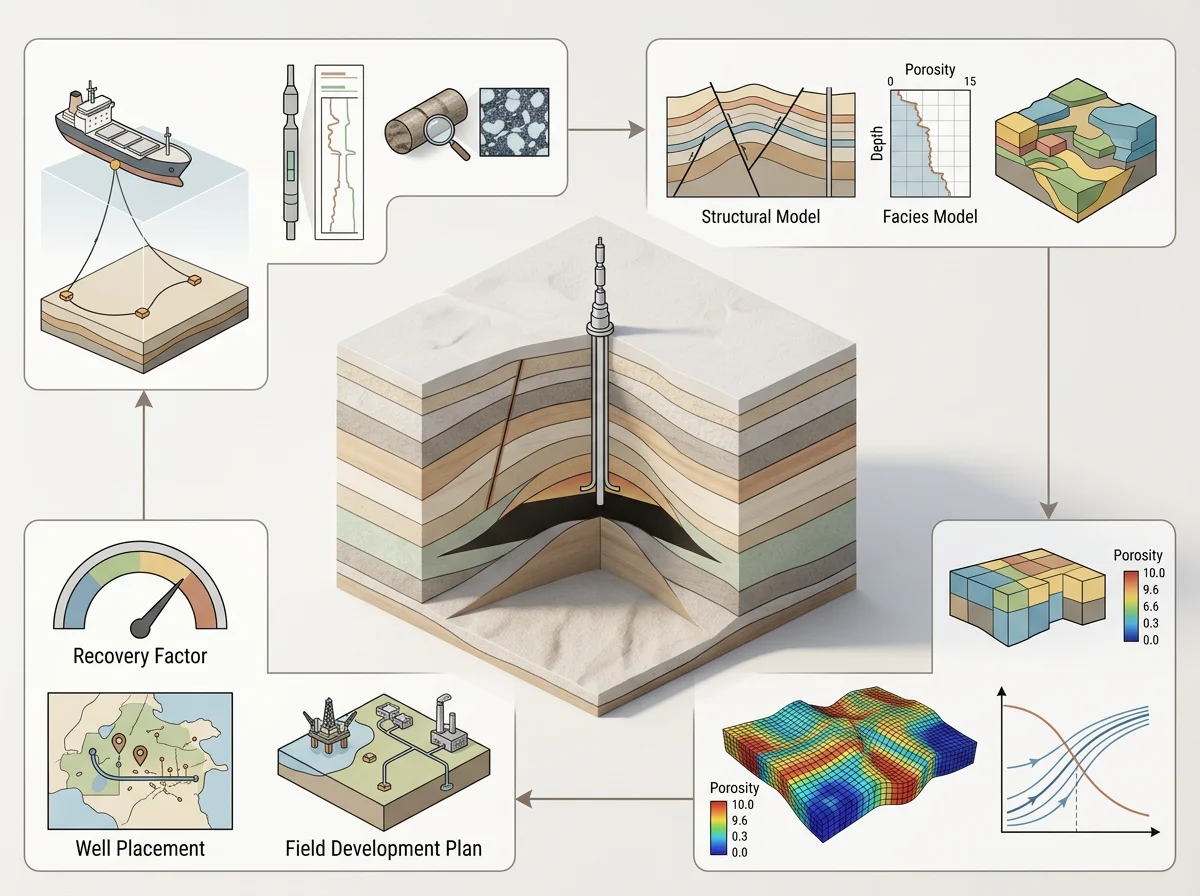
Product discovery - object oriented UX
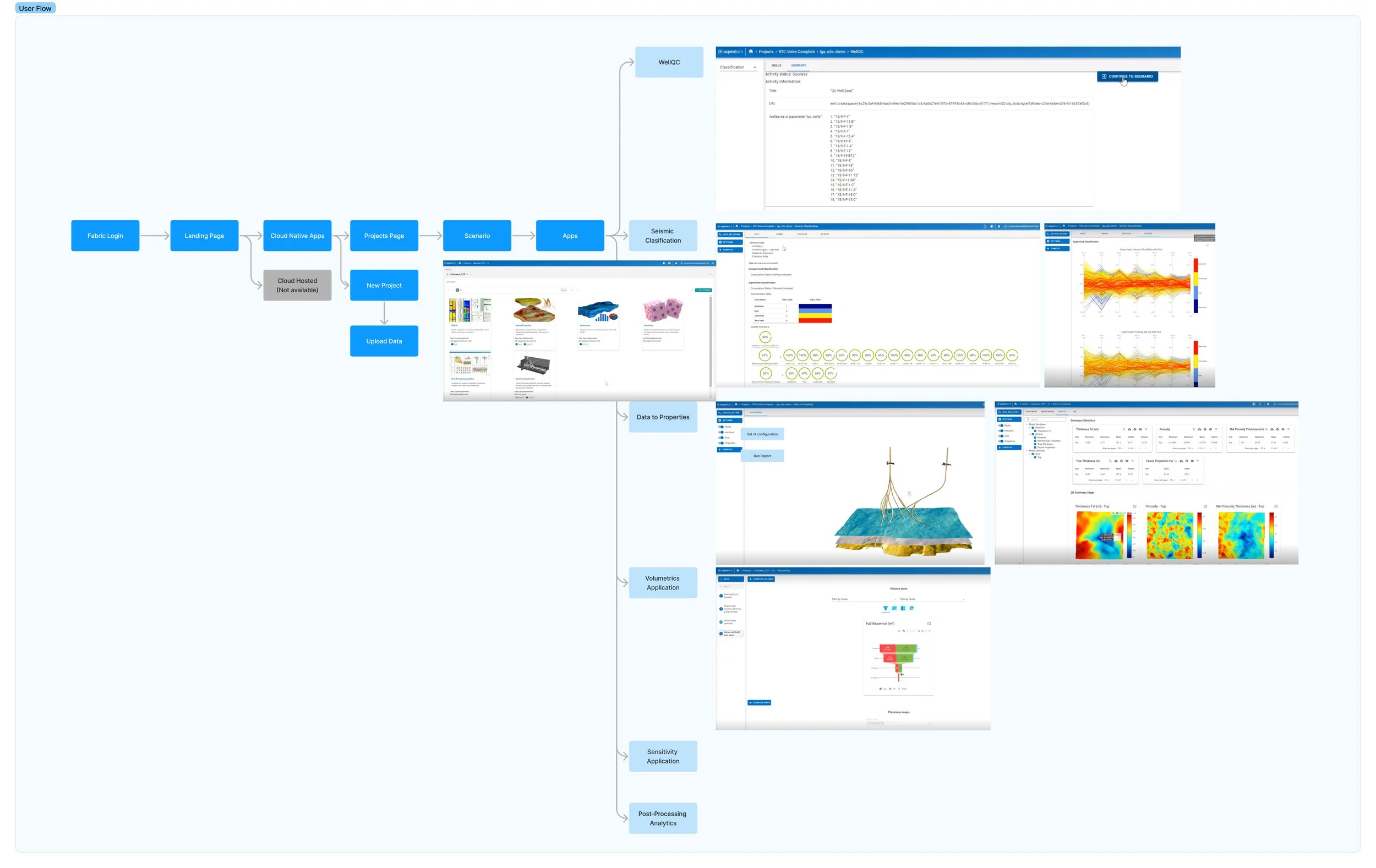
Mapping end to end experience
User journey mapping - identifying objects and mental model
Information architecture
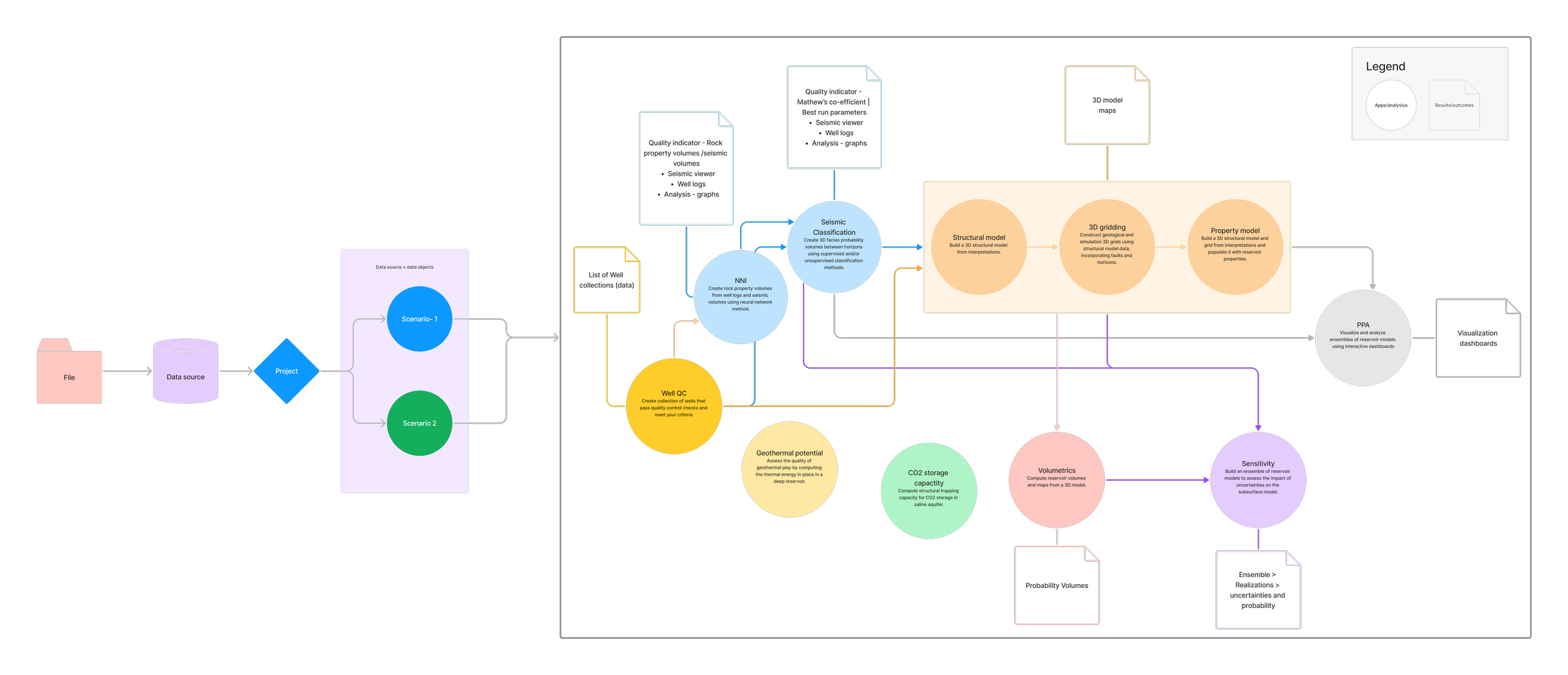
Data model
Defining heirarchy
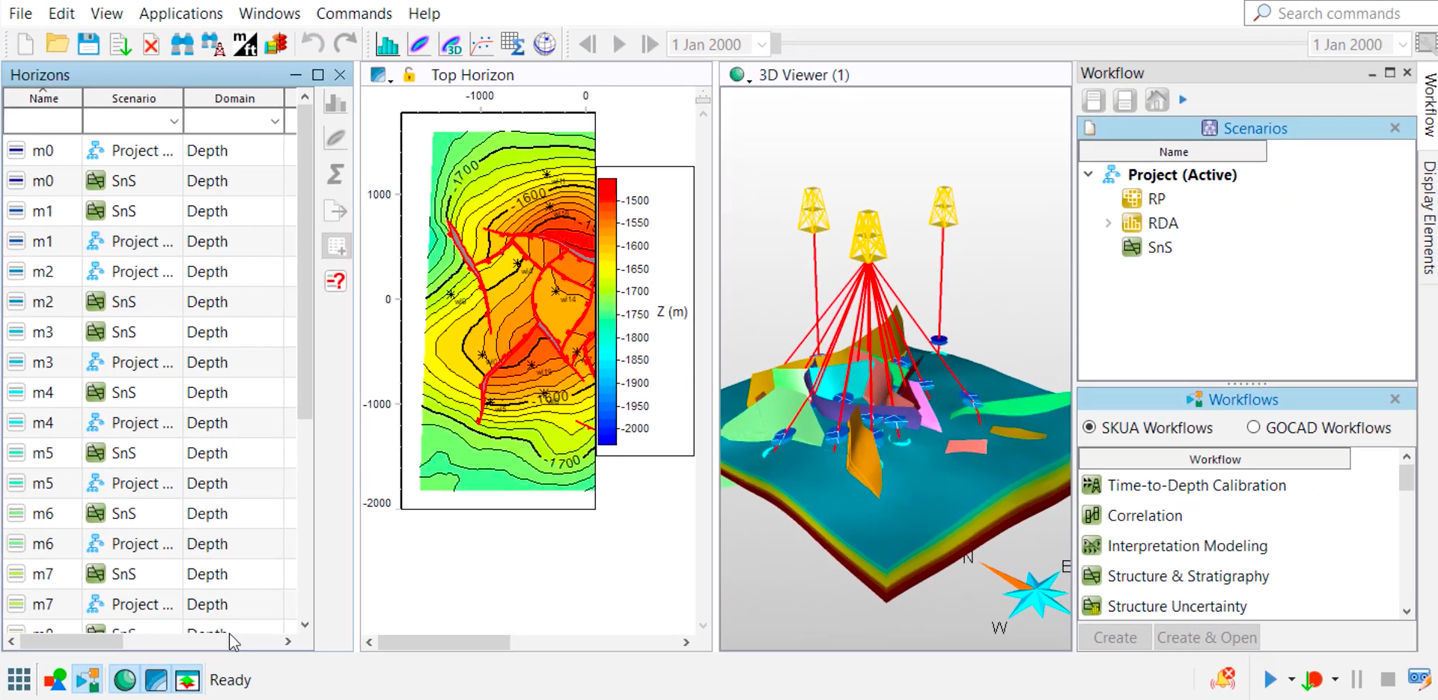
Before
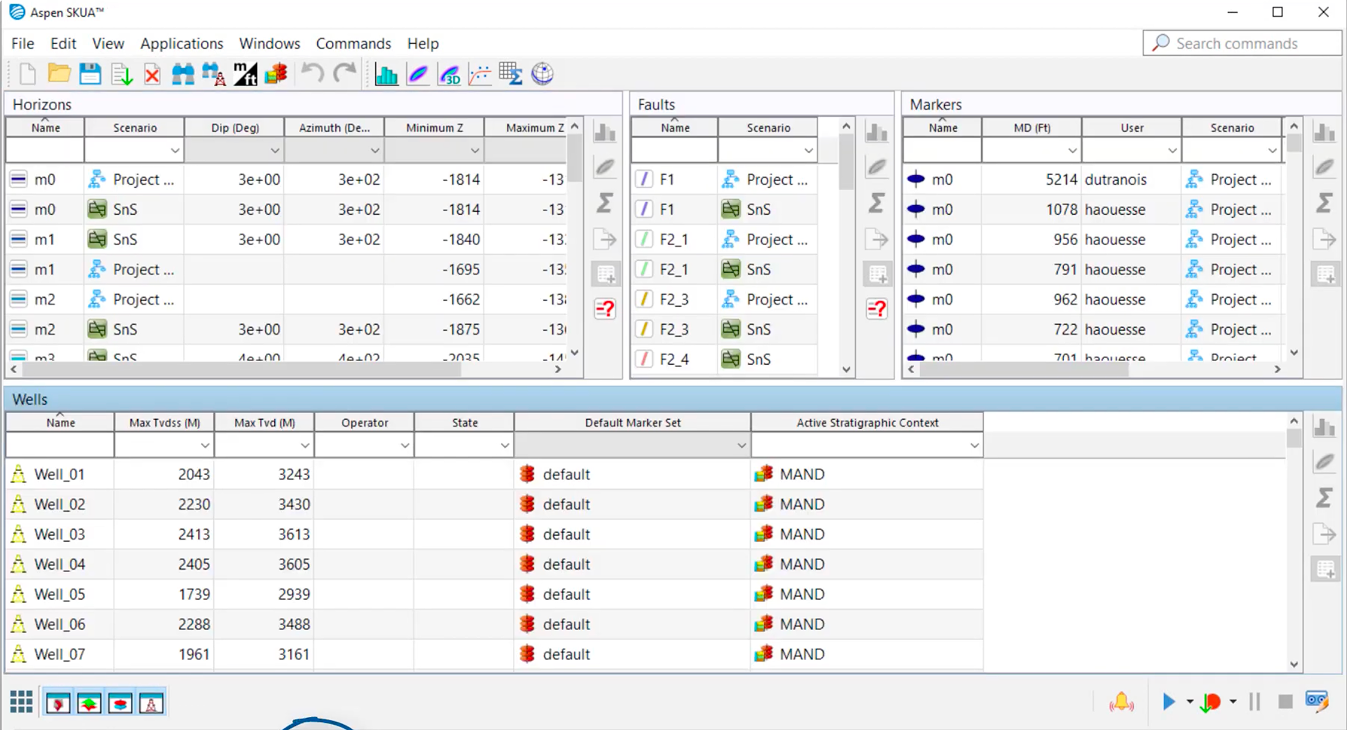
Geoscientists in subsurface engineering work across fragmented, disconnected tools — forcing constant context-switching, manual data reconciliation, and cross-system validation. These workflows unfold over years and involve massive datasets, 3D modeling, and simulations that inform high-stakes energy decisions, where a wrong output can carry real financial and environmental consequence.
UX challenge
The core UX challenge wasn't integration alone, it was
Reducing cognitive load without compromising scientific rigor
Unifying fragmented workflows without flattening their complexity.
This was made harder by the users themselves: experts deeply accustomed to legacy systems, many of whom equated simplicity with loss of control. Any "cleaner" interface risked being read as less capable, less precise, less trustworthy.
Approach
The approach had to be about shifting a mindset: building a platform intuitive enough to onboard the next generation of geoscientists, while remaining rigorous and precise enough to earn and keep the trust of 20-year experts. This shaped three key design decisions: Simplicity, automation and confidence
After
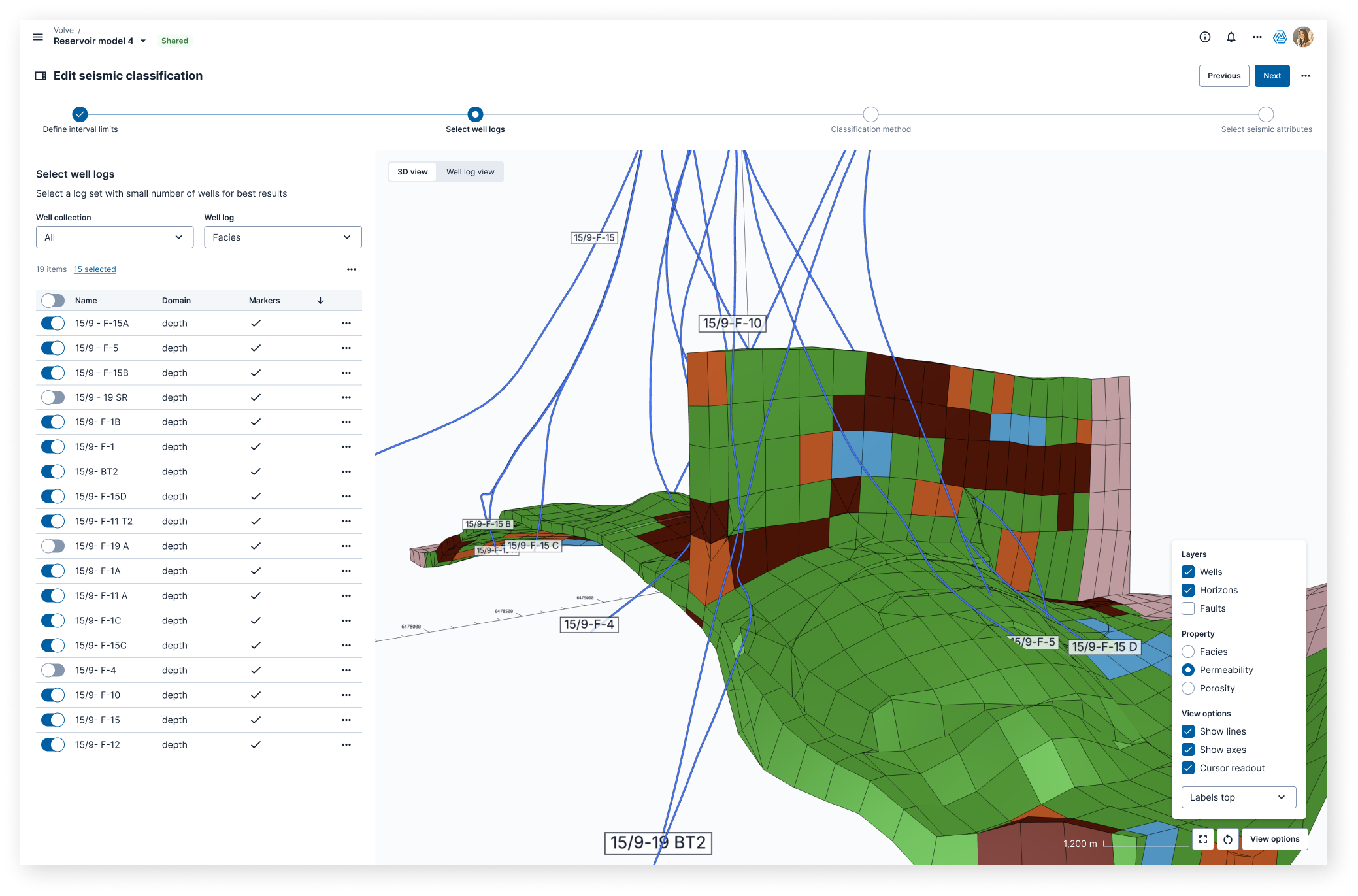
Configuration experience
Separated the configuration and results views to give users a clear mental model of setting up a workflow versus reviewing its output. Within configuration, replaced ad hoc setup with a guided, step-by-step process — reducing ambiguity about what to do next and where they were in a complex, multi-stage setup.
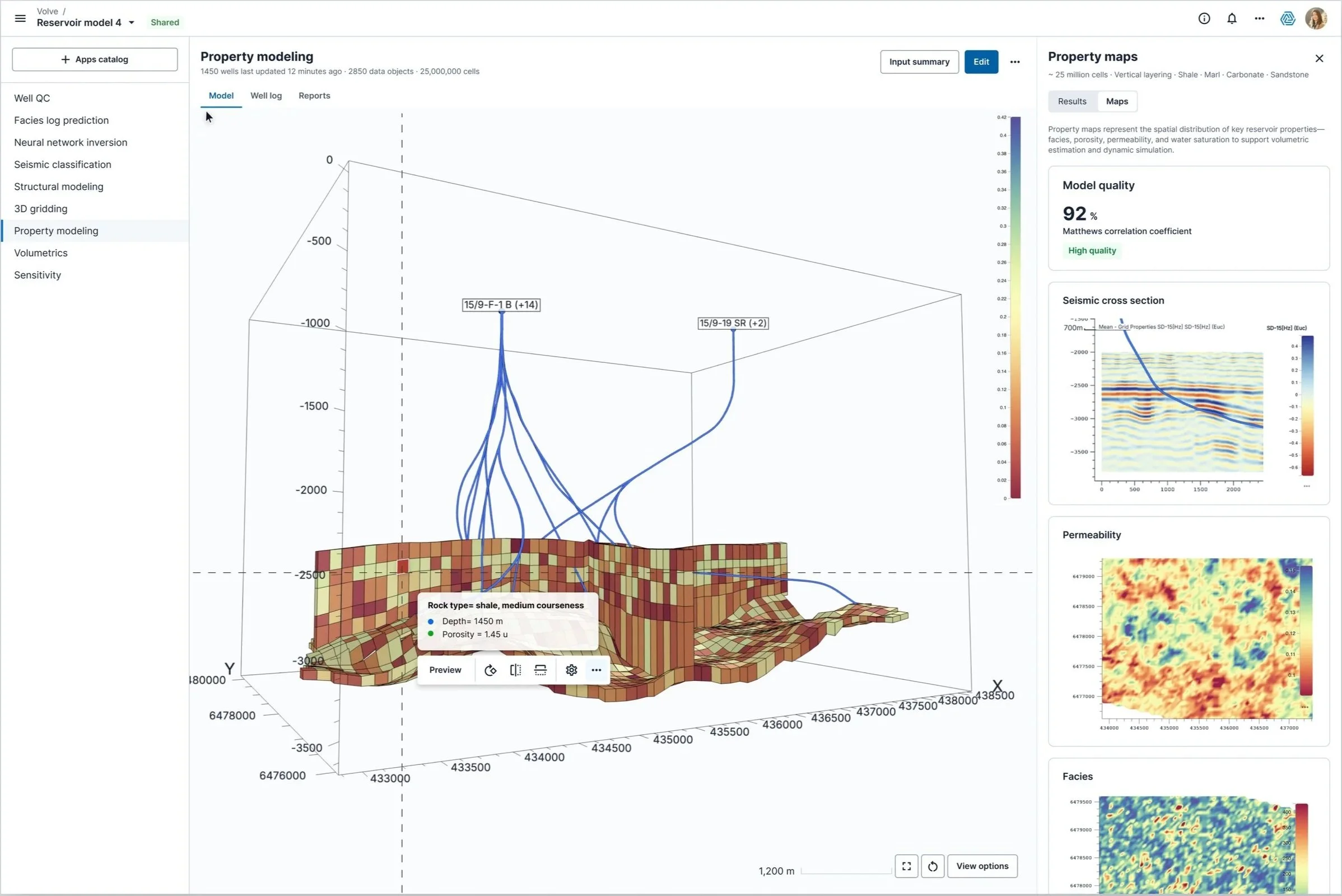
Result view
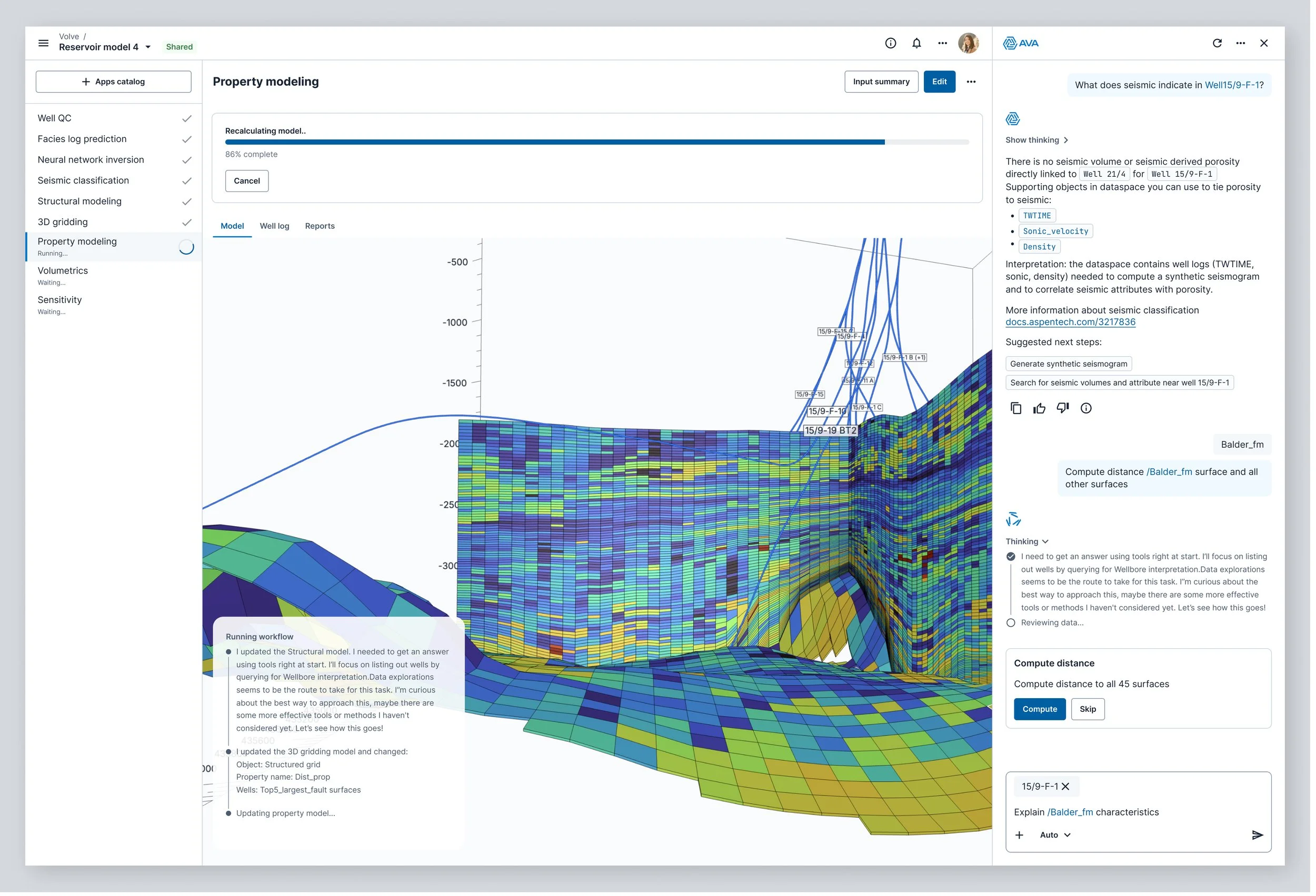
Designed to help users move from data to decision faster, with greater confidence. Users can review a clear input summary, jump back to edit their configuration without losing context, and explore results through multiple lenses — analysis views, maps, and reports — all within the same space.
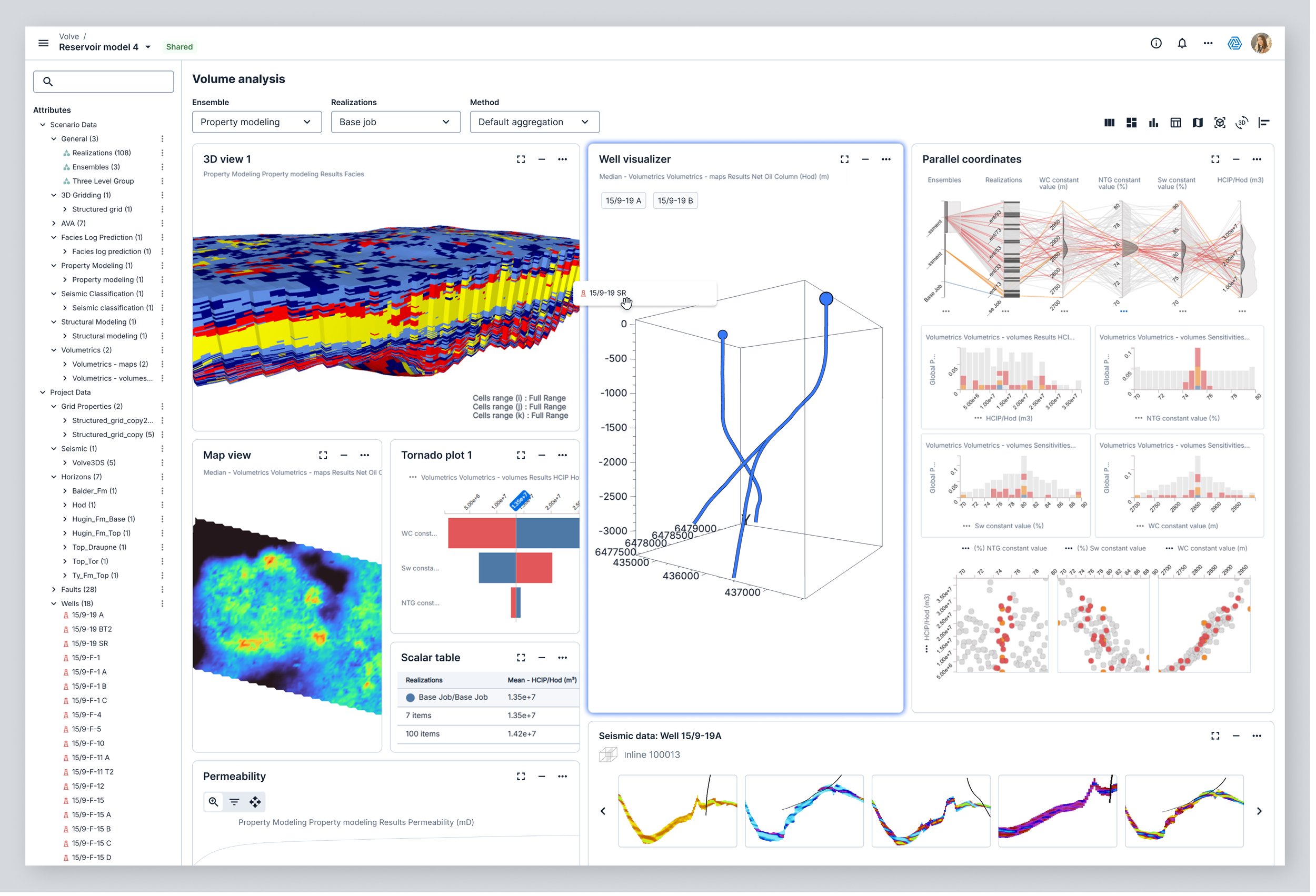
Data visualization
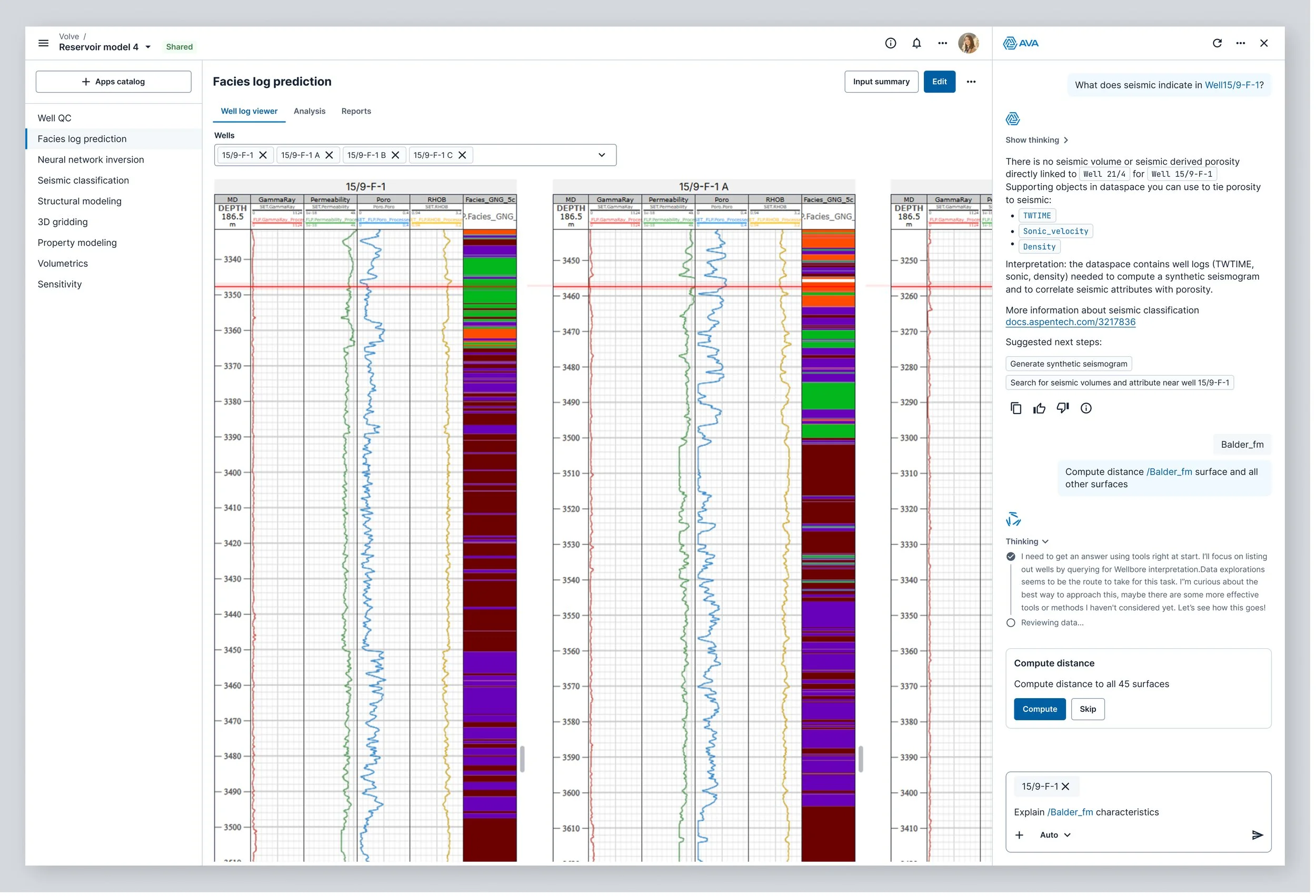
Built a dashboard experience where users can visualize models, maps, seismic data, and well logs side by side — and customize their own dashboard layout to match how they work.
Collaboration
Dashboards and scenarios can be shared across teams, so different personas — from geologist to reservoir engineer — can view the same data in the context that matters to their role, without re-requesting files or rebuilding views from scratch.
AI integration
Users can interact with AVA, an AI assistant, to access advanced functionality that isn't otherwise surfaced in the interface — without needing to hunt through menus or documentation. Through natural conversation, users can surface additional information and data, run apps, and get AI-assisted analysis, all without leaving their current context.